Car
Hire Spain - Car
Leasing Spain -
Motorhome
Hire Spain
Why Visit Spain
Spain, situated in the south-western part of Europe is
an incredible tourist location. Owing to its various interesting
natural sites like the snow-capped mountains, white sand
beaches, sprawling green plains and the valleys, Spain
is thronged by tourists from all over the world. Not only
these, but the tourists are also fascinated by the different
structures and architectural wonders including the various
palaces, parks, cathedrals, castles, beaches and museums.
Popular Destinations in Spain will let you know more about
this aspect.
Madrid and Barcelona are the most visited and the most
sought-after Popular Destinations in Spain. The former
represents a modern city with stupendous and astounding
architectures reflecting cultural heritage and tradition.
The Plaza Mayor and the Plaza de la Villa are the prominent
places in this city. The magnificent Royal Palace, the
Botanical Gardens, the Casa de Campo and the famous Prado
Museum are some of the popular things to be seen in Madrid.
Popular Destinations
in Spain:
Madrid -
The city is located on the river Manzanares in the
centre of both the country and the Community of Madrid
(which comprises the city of Madrid, its conurbation
and extended suburbs and villages). The capital of
Spain, located in the heart of the peninsula and right
in
the center of the Castillian plain 646 meters above
sea level, has a population of over three million.
Barcelona -
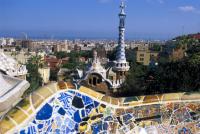
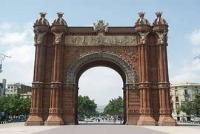
Barcelona, the capital of Catalonia, is a cosmopolitan
Mediterranean city that incorporates in its urban street
pattern Roman remains, medieval districts and the most
beautiful examples of Modernism and 20th century avant-garde
art.
Bilbao -
Bilbao is the heart of a metropolis with a population
of more than a million people. It is the driving force
of social and economic development and it is the main
factor in the modernisation of the Gulf of Biscay.
Cordoba -
Situated deep in Andalusian Autonomous Region, Cordoba is a compendium of history
and modernity. This ancient city, which has been declared
World Heritage Site, is a living legacy of the diverse
cultures that settled in it throughout history.
Granada -
Granada has a vast network of accommodation, including historic buildings, such
as the old convent of Santa Paula (AC Hotel) and the
convent of San Francisco (Parador de Turismo located
inside the Alhambra), "cármenes" (traditional
villas with gardens) in the Albaicín, and cave
houses in Sacromonte.
Santiago
de Compostela - Discover Santiago de Compostela,
the capital of the Region of Galicia. Millions of people
from all over the world come to this city every year,
many of them reaching the end of the Camino de Santiago
pilgrimage route.
Salamanca -
Salamanca is in the central area of Spain, 212 kilometres
from the capital, Madrid. Universal, magnificent, wise,
young and golden: this city is an inland destination
well worth discovering for many reasons.
Sevilla -
Seville is a remarkable southern business and service
centre, having many hotel beds distributed all over the
city allowing the visitor to discover the many attractions
the city holds.
Valencia -
Valencia equals commerce, culture, cinema, theatre, museums, music, business.
It is a place for international and avant-garde design
and one of the most attractive cities in Europe when it
comes to fairs and conventions.
Zaragoza -
one of Spain's major cities. The capital of the Region
of Aragon is located on the banks of the Ebro River,
halfway between Madrid and Barcelona. There are many
reasons to come to this open, friendly city.
Spanish
Cuisine:
The Spanish have never acquired the international reputation
for haute cuisine enjoyed by their French neighbours.
And millions of foreign tourists who flock to Spain’s
costas each summer find their menu options at best
limited and at worst swimming in garlic!
In
fact many overseas visitors never sample a taste of the “real Spain” because
the most popular coastal areas have been saturated with
fast food joints and international
restaurants.
To
savour the truly wonderful world of Spanish food it’s
essential to venture beyond the seaside tourist traps and
follow the example of the Spaniards. Food is far more than
a way of keeping body and soul together in Spain – it’s
an entire experience and the focal point of the Spanish
way of life.
Spanish
food reflects this vast country’s
turbulent history, diverse geography and Mediterranean
culture. Centuries of occupation by the Moors, who were
the first to cultivate olives and oranges in Spain, made
a huge impact on the Spanish diet as did decades of extreme
poverty suffered by millions under Franco’s repressive
regime.
Spain
Climate:
The climate varies tremendously in Spain, due to its large size. Visitors can
generally expect a Mediterranean climate, characterized by hot, dry summers and
mild, rainy winters.
The vast central plateau, or Meseta, has a continental climate with hot, dry
summers and cold winters. Rain generally falls in spring and autumn. The mountains
surrounding the plateau have a higher rainfall and often experience heavy snowfalls
in winter.
North of the Cantabrian mountains, the Basque Country,
Cantabria, Asturias and Galicia have a maritime climate,
with cool summers and mild winters. The weather is often
cloudy with frequent rainfall.
On the Mediterranean coast, the climate is moderate with
rain in spring and autumn. Murcia has an almost African
climate and is characterized by numerous palm trees. Rainfall
is low and the calina, or heat haze, is common during summer.
On the Atlantic coast, the summers are cooler and fairly
heavy rainfall occurs during winter. Inland, the summers
are hot and the rainfall decreases.
The Balearic islands have a maritime climate, with cool,
wet winters and warm, dry summers.
The Canary Islands have an even warmer climate. The coastal
areas are fairly mild, but the interior, especially in
arid areas of Tenerife, can get very hot during the day
with cold nights. Mount Teide is often snowcapped in winter
and the vast majority of rain falls in winter.
Required
clothing: Light- to mediumweights and rainwear,
according to the season


 Spain
Country Information